
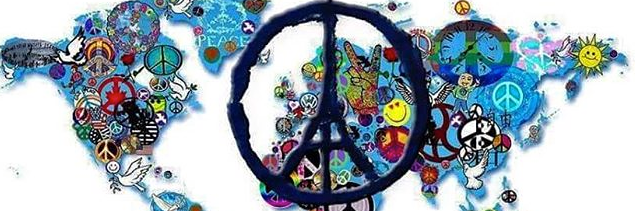
Concerted terrorist attacks struck Paris on November 13, 2015 and left the world in awe. Sentiments of disbelief and outrage were poured into the social media. World leaders made statements of solidarity, national landmarks were lit up in the colors of the French flag, Facebook offered both a safety check-in feature and the option to impose the French flag over profile pictures. All this focus on Paris generated a backlash based on the resentment that the terrorist bombings in Beirut a day before did not get as much attention. World leaders did not make statements, national landmarks were not lit up in the colors of the Lebanese flag, Facebook offered neither a safety check-in feature nor the Lebanese flag. The same terrorist organization had staged bombings in Ankara on October 10th, claiming 102 lives. The world did not react the way they did for Paris then either. There was resentment at the feeling that non-White, non-European lives do not matter as much. It was Euro-Centric and white supremacist that lives of people from Lebanon, Turkey or Iraq are not valued and mourned as those from France, commentators argued, they should have generated the same outrage or sadness when taken by the terrorist acts by the same organization.
I was reading the backlash and found some truth in it. However, I had some discomfort about this backlash that I could not pin down at first. When I remembered some of the social media reactions after Ankara, I figured it out. Now, I have questions for those who feel resentment after Paris: Did you mourn for your own victims? Or did you remember that your fellow citizens fell victims to terrorist attacks only when the spotlight turned to Paris? Did the Shiite or Kurdish victims in Beirut or Ankara who you assumed to be “Hizbollah” or “PKK” militants become “your” victims only when French victims got the attention?
I am not very familiar with the details of the Beirut bombing. Although I think similar patterns exist in Lebanon and Turkey, I will focus on what happened on October 10th in Ankara and its aftermath. Suicide bombers targeted a peace rally which consisted of mostly leftist groups and Kurds, weeks before parliamentary elections. In the months leading up to the Ankara attacks, the dominant Justice and Development Party (AKP) had increased its nationalist discourse and did not refrain from vilifying the Kurds in hopes to gain the nationalist vote. The armed conflict with Kurdistan Workers’ Party (PKK) had intensified in the Southeast throughout the summer. Police and military funerals in Western provinces fed anti-Kurdish sentiments among the Turks.
People of Turkey were divided in their response to the bombing in Ankara. We were not able to unite and show solidarity even in our sorrow. There were numerous twitter posts expressing not sadness but contention about the deaths. Wrongly assuming the victims were all Kurds, some revengeful Turks felt vindicated for the dead police and military members. It is plain hypocrisy for those who opposed the government decision to hold a day of national mourning for the Ankara victims to expect the world to mourn for these victims after Paris. It is not right for those who disturbed a moment of silence for the Ankara victims before a soccer game with whistles and boos to expect acknowledgement of these deaths by the rest of the world. It is rewriting history when those who branded Ankara victims terrorists to claim they are as worthy as the Paris victims. Of course they are as valuable and worthy as Paris victims, you just noticed it now, after Paris got the spotlight.
This is the curse of divided societies that have deep ethno-religious fault lines that get only deeper throughout violent conflict, like Lebanon and Turkey. The ideal of a nation-state, that was borne out of the French revolution, failed in these societies. Despite initial attempts at fostering nationalism, the ethno-religious identities remained more salient or became more salient in time. Inside the Lebanese borders, what matters for daily life and politics is whether you are Sunni, Shiite or Maronite. Inside the Turkish borders, what matters is whether you are a Sunni Turk, Kurdish or Alevi. Decades of violence, civil war, injustice, contestation for votes and state patronage, and resentment have further strengthened the borders between these groups. The negative feelings are so deep that some cannot express sadness at the others’ deaths. Much worse, some rejoice.
There is an interesting aspect of political identities, though. They are relative. You are a Sunni when faced with a Shiite, you are a Turk when faced with a Kurd. However, all of these individuals are Lebanese or Turkish when faced with a French. If we were reminded that we have also been victimized only when the White European victims got attention, there is a problem. We have to learn to mourn for our own victims across our social divisions before we can ask the rest of the world to mourn for us.
The critique of Eurocentrism is an inappropriate response to the reactions after Paris bombings. Eurocentrism has deep roots in history for the Middle East and for former European colonies. It is a valid critique of the state of affairs and it needs to be undone, yes. However, we cannot dictate people who to mourn for. People mourn for those who are familiar and who they feel affinity with. Rather than criticizing people for being shocked and sad for Paris victims, we need to undo the reasons why France is more familiar and likeable for these people than Lebanon, Turkey, Iraq, Egypt, or Afghanistan. Lebanese people resented that Paris attacks got worldwide attention, but did they react to the Ankara bombings a month ago? Do terrorist acts in Iraq or Egypt generate the same buzz in conventional or social media in Turkey the same way a terrorist act in France does? Do Middle Easterners care about the “Black Lives Matter” movement? Most of the Middle East is Eurocentric itself and we can discuss why it is so or why it should change. However, a time of mourning after horrific deaths is not the right time to discuss this or to keep up with the Joneses through terror victims.
The best way to build affinity with people in the rest of the world is not chastising them for not mourning enough for our people but to find ways to build familiarity. Our globalized world has more opportunities than ever to build bridges across different parts of the world, between people of different backgrounds. We still need to start with our own neighbors, though, those “others” that are closest to us. Tripoli needs to care more about Burj al-Barajneh, Istanbul needs to cry more for Silvan before they can expect the rest of the world to care about and cry for them.
 Ebru Erdem Akcay